
Transmission Repair San Antonio
When shifting feels off, drivers searching for transmission repair in San Antonio usually want three things quickly: what is happening, how urgent it is, and what it will take to fix it.
At Auto Service Experts, 13050 San Pedro Ave in San Antonio, our ASE-Certified Master Technicians approach transmission concerns the same way we handle any drivability problem. We perform advanced transmission diagnostics to verify the root cause with real data, then explain the results in plain language so you can make a clear decision.
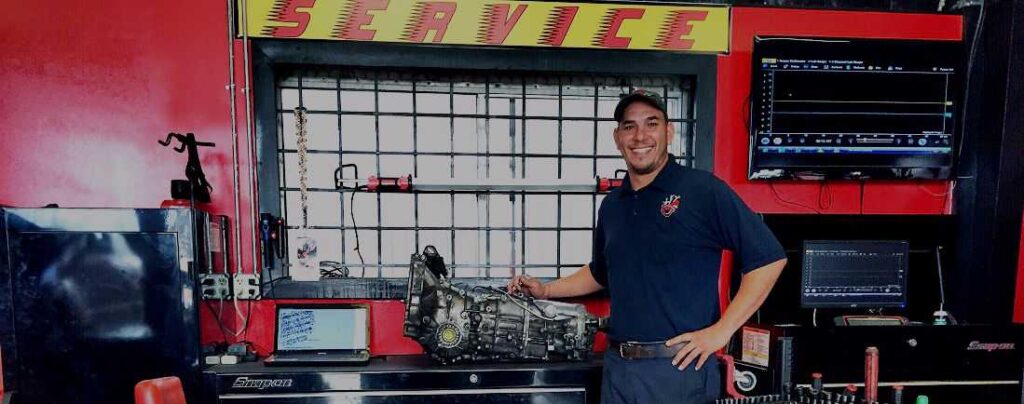
If your vehicle is slipping, shifting hard, leaking fluid, or showing a transmission warning light, the first step is accurate testing. Our team has been diagnosing and repairing transmission problems for more than 20 years, using professional diagnostic equipment and a structured testing process.
Trusted Transmission Repair & Service For 20+ Years
We service automatic transmissions, CVTs, manual transmissions, clutches, hybrid drivetrains, and diesel vehicles. Because transmission symptoms can sometimes originate in other systems, we also inspect all related components and systems. These include engine performance, driveline mounts, axles, cooling systems, electrical controls, and the differential before recommending repairs. Learn more about our differential service.
Our goal is simple: identify the real cause, explain your options clearly, and help you make the best repair decision for your vehicle.


Common Transmission Problems We Diagnose & Repair
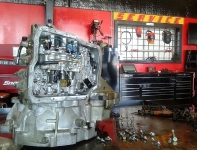
Transmission Slipping Between Gears
Transmission slipping usually occurs when internal clutches cannot hold the gear because of pressure loss, worn friction material, or fluid problems. In many cases this leads to Automatic Transmission Repairs when internal clutch wear is confirmed.
What you feel: engine revs increase while vehicle speed lags, a soft surge during acceleration, or the sensation drivers describe as “My car is slipping when I accelerate.”
Common Verified Causes of transmission slipping:
- Low or aerated transmission fluid from a leak
- Incorrect fluid type, overfill, or contamination
- Worn clutch packs, bands, or internal pressure loss
- Valve body wear, sticking valves, or solenoid control faults
- Torque converter clutch slip or shudder under load
Some drivers first notice a transmission fluid leak under car, which should always be inspected before fluid loss creates further damage.
How repeat transmission Slipping Problems are prevented
First, we confirm the fluid level and condition correctly, then we verify line pressure and shift command behavior. After that, we address the cause, not just the symptom. For example, fixing a cooler line leak without verifying the fill procedure can create a comeback.
Next step: See the full diagnostic page: Transmission Slipping When Accelerating San Antonio
Transmission Jerking or Hard Shifting Between Gears
Harsh or jerking shifts usually occur when transmission pressure applies too quickly, a valve body circuit spikes pressure, or the drivetrain amplifies a normal shift event.
What you feel: a sudden bump or jolt during a gear change, especially during acceleration or the 2–3 shift. Many drivers describe this by saying the transmission jerks or bangs when shifting, especially during acceleration or when the transmission changes gears under load.
Common verified causes of hard shifting:
- Adaptive shift strategy needs relearn after battery disconnect or repair
- Solenoid performance issues or electrical faults
- Valve body wear causing pressure spikes
- Mount or driveline lash that amplifies normal shifts
- Engine torque issues that mimic a shift bang
How repeat failures are prevented
We separate a true hydraulic control problem from a driveline or engine torque issue. Then, we confirm with scan data, road test reproduction, and pinpoint tests before recommending parts.
Next step: See the full diagnostic page: Why Your Transmission Jerks Between Gears
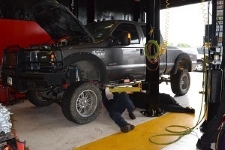
Transmission Won’t Go Into Gear or Delayed Engagement
Delayed engagement usually happens when transmission pressure builds slowly or when the apply circuit for Drive or Reverse cannot engage the clutch immediately.
What you feel: shifting into Drive or Reverse with a delay before the vehicle moves. Drivers often describe this as the car won’t go into gear or delays when shifting into drive. This can point to pressure loss, control issues, or internal clutch problems.
Common verified causes of Delayed Transmission Engagement:
- Low fluid level from an active leak
- Pump or pressure control problems
- Range sensor, shift cable adjustment, or selector issues
- Internal clutch or converter failure
- Control module inputs that prevent engagement
Another concern drivers report is “Car revs but doesn’t move,” which can indicate severe clutch slip or torque converter failure.
How repeat failures are prevented
We verify basics first, then we test the command path, pressure response, and mechanical engagement. Because of that, we avoid replacing parts based on guesswork.
Complete engagement failure points to a distinct set of hydraulic and electronic causes addressed through our Transmission Won’t Engage or Go Into Gear diagnostic evaluation.
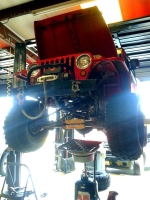
Transmission Fluid Leak Under Car
Transmission fluid leaks usually occur when seals, cooler lines, or the transmission pan gasket allow fluid to escape, reducing hydraulic pressure and leading to shifting problems.
What you see or smell: Red fluid spots under the vehicle, a burning smell from fluid contacting hot components, smoke or odor after parking, or the need to add transmission fluid more often than normal.
Common verified Transmission Leak causes:
- Low transmission fluid due to seal wear or a hydraulic leak
- Loose or damaged transmission pan gasket
- Cooler line leak or fitting failure
- Axle seal or torque converter seal leak
- Transmission case venting fluid after overheating
How repeat transmission fluid leaks are prevented
We inspect transmission fluid level and condition, check for external leaks, verify cooler line integrity, confirm pan gasket sealing, and test for overheating conditions. By identifying the exact leak source and correcting the root cause, we prevent repeat fluid loss and unnecessary component replacement.
Learn more on the dedicated transmission leak diagnostic page.
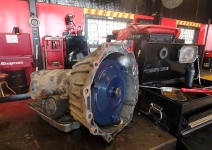
Car Revs but Doesn’t Move
When the engine revs but the vehicle does not move, the transmission is usually unable to transfer torque to the drivetrain. On manual transmission vehicles, this condition is often related to clutch failure and may require clutch replacement.
What you feel: the engine revs normally when you press the accelerator, but the vehicle barely moves or does not move at all.
Common verified causes:
- Severe clutch pack wear or failure
- Torque converter failure or internal slip
- Loss of hydraulic pressure from pump or valve body faults
- Broken internal components in the geartrain
- Control module inputs that prevent engagement
How repeat failures are prevented
We first confirm whether torque loss is hydraulic, mechanical, or electronic in origin. Then we verify fluid level and pressure response, review scan data for commanded gear and slip values, and reproduce the condition during controlled road testing. By separating internal clutch failure from control or pressure problems, we prevent unnecessary parts replacement and identify the true source of torque loss.
Next step: See the full diagnostic page for full details on why a vehicle revs but won’t move.
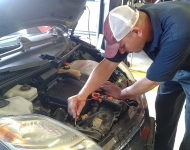
Check Engine Light With Transmission Code
When the check engine light appears with a transmission-related code, the vehicle’s control module has detected a condition that affects shifting, pressure control, or torque transfer. The code identifies the system involved, but it does not prove which part has failed.
What you notice: sometimes no noticeable change in driving, or symptoms like delayed shifts, harsh gear changes, or a transmission that feels like it is slipping.
Common verified causes of Transmission Fault Codes:
- Shift solenoid performance or electrical faults
- Pressure control solenoid or valve body wear
- Transmission temperature sensor or circuit faults
- Communication errors between the engine and transmission modules
- Torque converter clutch slip detected by the control module
How repeat failures are prevented:
We scan the engine and transmission control modules, confirm whether the code is current or history, review live data during a road test, and verify electrical integrity at connectors and grounds. By confirming whether the fault is hydraulic, electronic, or mechanical, we prevent unnecessary parts replacement and correct the true cause.
Next step: See the full details on our Transmission Warning Light Diagnostic page.

Engine Problems That Feel Like Transmission Issues
When a vehicle hesitates, jerks, or loses power during acceleration, the transmission is usually blamed first — but engine faults frequently produce identical symptoms. Accurate diagnosis requires scanning both the engine and transmission control modules before any parts are replaced.
What you feel: a jolt, hesitation, or power loss during acceleration that resembles a gear slip, delayed engagement, or transmission shudder — but originates in the engine.
Common verified causes:
- Engine misfire from worn spark plugs, failed ignition coils, or clogged fuel injectors
- Throttle position sensor fault sending incorrect data to both control modules
- Mass airflow sensor fault causing hesitation and surging mistaken for transmission shudder
- Vacuum leak producing rough running and stumble under load
- Fuel injector delivering inconsistent fuel causing cylinder-specific power loss
How repeat failures are prevented
We scan both the engine and transmission control modules simultaneously and monitor live data across both systems during a road test that replicates the symptom. By confirming which system’s data changes at the exact moment the symptom occurs, we identify the true root cause before any repair is performed.
Next step: See the full diagnostic page for details on engine problems that feel like transmission issues.

Torque Converter Failure
When a vehicle shudders at highway speed, slips during acceleration, or suddenly loses all drive, the torque converter is often the source. Torque converter failure produces some of the most misdiagnosed symptoms in automatic transmission repair — shudder is mistaken for engine misfires, slipping is blamed on clutch packs, and whining is attributed to the transmission pump.
What you notice: a shudder or vibration at highway speed during light throttle, an RPM surge that does not match a gear change, a whining noise at idle, or in severe cases a complete loss of drive.
Common verified causes of Transmission Fault Codes:
- Torque converter clutch friction material worn or contaminated causing shudder during lockup
- TCC slip allowing RPM to rise independently of vehicle speed at highway cruise
- Stator one-way clutch failure reducing torque multiplication and causing weak acceleration from a stop
- Internal fluid contamination from friction material debris damaging solenoids and clutch packs
- Pump drive failure preventing the transmission pump from generating hydraulic pressure
How repeat failures are prevented:
We perform a stall speed test, monitor live TCC command and slip data during a road test, and inspect fluid condition for metallic debris and friction material. By confirming the exact failure mode before any disassembly, we determine whether the converter alone requires replacement or whether secondary damage to solenoids and the valve body is also present.
Next step: See the full diagnostic page for details on torque converter failure.
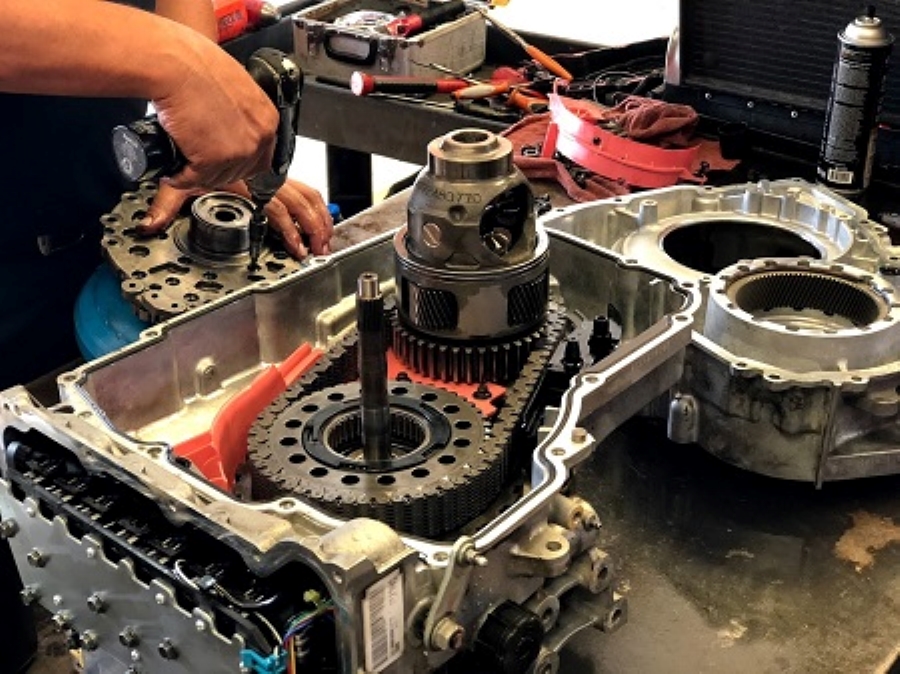
Why San Antonio Drivers Choose Auto Service Experts
- Master ASE Technicians (Certified by the National Institute for Automotive Service Excellence)
- Advanced diagnostic testing
- Factory-quality service standards
- 3 Year / 36,000-mile warranty
- Transmission Repair Financing
- AAA Approved Auto Repair Shop
- BBB A+ Rating
- RepairPal Certified Facility
- NAPA AutoCare Center
- TechNet Professional Repair Shop
- Dealer-quality repair without dealer pricing
- Transmission diagnostic Free with approved repair
- Same-day service when available
- Complimentary Shuttle service for 5 mi radius
Transmission Repair by Make and Model
Transmission problems vary by make. Select yours below for repair information specific to your vehicle, including the common problems we see. We also work on vehicles not listed here. If you don’t see yours, give us a call.
Transmission repair costs in San Antonio typically range from $300 to $3,500 for most repairs, with major replacements costing more, all backed by our 3-year/36,000-mile warranty.
How We Diagnose Transmission Problems in San Antonio
A code scan is a starting point, not the finish line. Modern transmissions blend hydraulics, electronics, and mechanical components, so accurate diagnosis requires a structured testing process rather than guesswork.
We follow a verification sequence so the diagnosis is repeatable and the real cause is confirmed before recommending repairs:
- Confirm the concern and map the symptom: We ask when the problem occurs: hot or cold, under load or steady cruise, during a specific shift, or only under acceleration.
- Scan transmission and engine control modules: We review stored codes, freeze‑frame information, and live data such as commanded gear, slip values, shift timing, and temperature readings.
- Planned road test with data recording: We reproduce the concern while monitoring live data so we can capture exactly what the transmission and control modules are doing at the moment the symptom appears. Live data monitoring covers commanded gear vs. actual ratio, TCC engagement behavior, line pressure response, turbine slip values, and solenoid timing. That comparison between commanded and actual is what separates a control fault from a mechanical one.
- Fluid level and condition inspection: We verify the fluid level using the correct temperature and fill procedure, then check for contamination, signs of overheating, or debris that may indicate internal wear.
- External system inspection: Because other systems can create transmission‑like symptoms, we inspect mounts, axles, driveline components, cooling systems, and related mechanical factors. Lift inspection covers CV joints, driveshaft and U-joints, pan gasket, shift cable, vacuum lines, ground strap connections, cooler line fittings, and all external seals.
- Pinpoint testing when required: Electrical tests, solenoid command checks, wiring integrity tests, and hydraulic pressure testing are performed when data indicates a specific circuit or component.
- Clear explanation of verified options: Once the cause is confirmed, we explain whether the solution is service, repair, rebuild, or replacement so you can make a confident decision.
If a simple repair resolves the issue, we recommend it. If testing confirms internal damage, we explain rebuild and replacement options clearly so you understand the long-term implications before any work begins.
Choosing the right shop matters when diagnosing modern transmissions. If you want to know what to look for when selecting a repair facility, read our guide on how to find a reliable transmission shop near you.
Prevent Repeat Transmission Failures
Transmission life is strongly tied to heat control, fluid condition, and proper maintenance. Many of the transmission repair problems we diagnose in San Antonio begin with fluid breakdown or overheating that was not addressed early. When fluid loses its ability to cool, lubricate, and maintain pressure, internal clutches and seals wear rapidly. Addressing these issues early can prevent many major transmission repairs.
How Maintenance Prevents Transmission Failure
This short video explains how modern transmissions operate and why proper fluid maintenance helps prevent overheating, internal wear, and premature failure.
Key prevention factors
- Maintain correct transmission fluid level and address leaks early
- Replace transmission fluid before contamination damages internal components
- Use the correct manufacturer-specified fluid type
- Keep the cooling system operating correctly, since heat is the primary cause of failure
- Repair engine misfires or torque issues that stress clutch packs
- Follow manufacturer’s service intervals for fluid and filter maintenance
Emergency brake/parking pawl This is specific and most drivers don’t know it: engaging the emergency brake before shifting into park protects the parking pawl from bearing the full weight of the vehicle. Must engage the E-brake while stopped, before shifting to park — not after. Add one sentence to the maintenance section on the hub.
Don’t use overdrive when towing Quick practical tip not currently on the hub. When towing or carrying a heavy load, turn off overdrive. Short, specific, useful.
Transmission fluid condition is the single most controllable factor in transmission lifespan. The Automatic Transmission Rebuilders Association estimates that roughly 90% of transmission failures are caused by overheating — most of which could have been prevented by replacing degraded fluid.
Strenuous driving conditions accelerate fluid breakdown faster than normal highway use, including stop-and-go traffic, towing, hauling heavy loads, extreme heat, and steep inclines. Vehicles operating regularly under these conditions require more frequent fluid service than the standard manufacturer interval.
Healthy fluid is clear and red. Dark or black fluid with a burnt smell means clutch material has already broken down — internal inspection is needed before recommending a fluid service. Milky or foamy fluid indicates coolant intrusion from a failed cooler inside the radiator. Overfilling is as damaging as running low — excess fluid aerates under load and destroys hydraulic pressure. Many late-model vehicles have no dipstick; level requires a temperature-specific procedure to verify correctly.
Two habits that cause avoidable damage: shifting into park or reverse before the vehicle fully stops, and flat-towing a front-wheel drive vehicle with the drive wheels on the ground. Both put load on components not designed for it.
Transmission fluid performs several critical tasks. It cools internal components, lubricates moving parts, cleans debris from clutch wear, and provides the hydraulic pressure required for gear changes. As fluid breaks down or becomes contaminated, these functions weaken, which increases heat and friction inside the transmission.
When a Warning Light or Transmission Data Code Matters
A check engine light may be triggered by transmission codes, engine torque management issues, or communication faults that influence shifting. While a code identifies the system involved, it rarely proves which specific component has failed.
We treat codes as a starting point. Then we verify:
- Whether the code is current and repeats
- The conditions that set it, speed, temperature, gear, and load
- Electrical integrity at connectors and grounds
- Whether the symptom is mechanical, hydraulic, or control-related
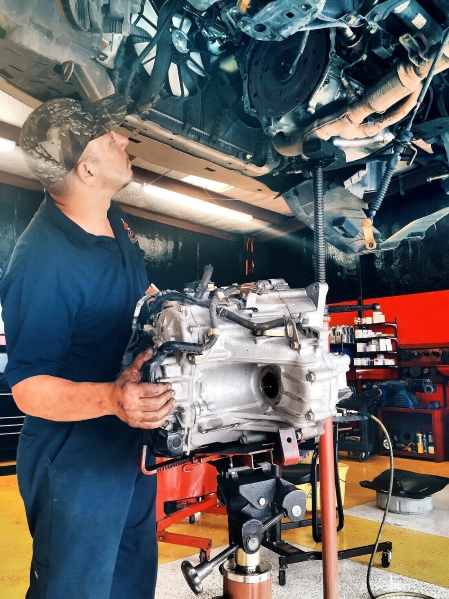
Transmission Repairs and Services We Perform
Transmission problems can involve fluid condition, electronic control issues, hydraulic pressure faults, or internal component wear. Transmission repair costs can range from simple external fixes to internal rebuilds, depending on the type of damage and the transmission design. Our San Antonio Transmission Repair Cost Guide explains the factors that influence pricing and common repair ranges.
The following services represent the most common transmission repairs and maintenance procedures we perform at Auto Service Experts.
- Transmission Diagnostic Testing: Advanced scan tool analysis, live data monitoring, and controlled road testing are used to identify the real cause of transmission problems before recommending repairs.
- Transmission Fluid Service: Drain, inspection, and refill using manufacturer-specified fluid to restore lubrication, cooling capacity, and proper hydraulic operation.
- Transmission Fluid Leak Repair: Identification and repair of leaks from seals, cooler lines, axle seals, pan gaskets, or case components that can reduce pressure and damage internal parts.
- Transmission Filter Replacement: Replacement of clogged or restricted filters that can reduce fluid flow and cause pressure instability inside the transmission.
- Transmission Solenoid Replacement: Repair of shift and pressure control solenoids that regulate gear changes, line pressure, and torque converter clutch operation.
- Transmission Valve Body Repair: Correction of worn valves, sticking hydraulic passages, or pressure regulation problems that can cause slipping, harsh shifts, or delayed engagement.
- Torque Converter Replacement: Replacement of torque converters that cause shudder, internal slip, or poor torque transfer between the engine and transmission.
- Transmission Mount Replacement: Repair of worn drivetrain mounts that can create harsh shifting sensations, vibration, or drivetrain movement under load.
- Transmission Cooler Line Repair: Repair or replacement of damaged cooling lines or fittings that can lead to fluid loss and overheating.
- Transmission Reprogramming and Adaptive Relearn: Software updates and adaptive learning resets that restore the correct shift strategy after repairs, battery disconnects, or module updates.
- Transmission Replacement: Installation of a verified replacement transmission when internal damage makes repair impractical or when rebuilding is not the most economical option.
- Transmission Rebuild: Complete disassembly, inspection, and restoration of internal components, including clutches, seals, bearings, and hydraulic components, when internal wear is confirmed.
- Complete Transmission Service: Comprehensive inspection and maintenance covering fluid condition, electronic control operation, cooling system performance, and driveline components that influence transmission behavior.
Many transmission problems can be corrected with targeted repairs, such as a leak fix, solenoid replacement, or valve body repair. When testing confirms internal damage, we clearly explain rebuild or replacement options so you can choose the most practical solution for your vehicle.
Transmission Types We Service
Our technicians diagnose and repair all transmission systems, including:
- Automatic Transmission Repair
- Manual Transmission Service
- Clutch Repair & Replacement
- Hybrid Transmission Repair
- Differential Repair
Each of these pages explains the specific diagnostic process, repair options, and common failure patterns for that type of drivetrain.
Transmission Repair Reviews from San Antonio Drivers
⭐⭐⭐⭐⭐ 4.8 rating from 302+ verified reviews – Read All 302+ Reviews on Google

Local Guide Level 3
“The transmission in my vehicle went out. I called Carlos at AutoService Expert’s and my transmission was repaired within 4 days. Service was excellent and I’m very pleased with the work that was done.”
-Reviewed 2025

Local Guide Level 8
“My truck got stranded (transmission) during a San Antonio trip. Lena and her guys got my truck in quick, found out what was wrong with it and after ordering the part, my truck is running as good as new! Definitely recommend Auto Service Experts! They are great!”
Reviewed 2020
Real Customer Transmission Diagnosis Experience

Local Guide Level 4
“After seeing a KENS5 News story about Auto Service Experts and owner Carlos Rodriguez’s passion for his customers, I started using their shop for my car care needs…
My Suburban began having strange electrical issues and what felt like an intermittent miss. Carlos explained the diagnosis could take time because of the symptoms and began working through the trouble codes and road testing the vehicle.
After several road tests he noticed the torque converter tried to lock up while stopped at a traffic light, and a code for the transmission pressure sensor appeared. Carlos explained everything in clear terms and suggested pulling the transmission pan to inspect for debris.
When the pan was removed, aluminum shavings from the torque converter were found in the fluid. With this finding the transmission needed to be replaced. Because I travel out of town often, Carlos explained the options clearly, including factory replacement or rebuild.
I trusted his work and chose to have him rebuild the transmission…
Thank you Carlos for your dedication to your profession and excellent customer service. You named your company appropriately — you guys are Auto Service EXPERTS!”
See the full review on our Google Business Page.
-Reviewed 2017
Transmission Problems? Come see the ASE-certified specialists at Auto Service Experts.
Get Directions for Transmission Repair in San Antonio
Auto Service Experts
📍 13050 San Pedro Ave, San Antonio, TX 78216
📞 (210) 495-6688
⏰ Mon-Fri: 8:00 AM – 6:00 PM
Proudly serving San Antonio communities including Stone Oak, Rogers Ranch, Redland Oaks, Thousand Oaks, Encino Park, Hollywood Park, Hill Country Village, Olmos Park, Far North Central, Timberwood Park, and surrounding neighborhoods.
Or schedule service online now!
Frequently Asked Questions – San Antonio Transmission Repair Shop
How do I know if it’s a transmission problem or something else?
If the symptom changes with gear selection, fluid temperature, or specific shifts, it often points to transmission control or pressure issues. However, engine misfires and driveline lash can feel similar, so testing is the fastest way to separate them.
Can low transmission fluid cause slipping and delayed engagement?
Yes. Low fluid can reduce pump pickup and line pressure, leading to slip, delayed engagement, or no-move. We confirm the level using the correct temperature and fill procedure.
Is it safe to drive with a slipping transmission?
Short trips may be possible, but continued slipping increases heat and can accelerate internal damage. If the slip is new, we recommend testing soon so you know what is happening.
Do you rebuild transmissions?
We focus on diagnosis, verified repairs, and reliability. If a rebuild is the proven best path, we will explain why and discuss the most sensible options for your vehicle.
What does a harsh 2 to 3 shift usually mean?
It can be control strategy, solenoid control, valve body wear, or a torque input issue. We verify by comparing commanded shift events to pressure and slip data.
How much does transmission repair cost in San Antonio
Transmission repair costs in San Antonio typically range from $300 to $3,500 for most repairs, with major replacements costing more.
Why does it shift worse when cold?
Cold fluid is thicker, and clearances behave differently. That can amplify a weak seal, a sticking valve, or a pressure control issue. We road test both cold and hot when needed.
What information should I bring to the shop?
Tell us when the symptom started, whether it is hot or cold-related, any recent repairs, and whether any warning lights are on. Even small details shorten the diagnostic path.
Do you offer a warranty on transmission-related repairs?
Yes. Many qualifying repairs include our 3 Year / 36,000-mile warranty. We will confirm coverage details on your specific repair.
Have Transmission Questions?
Call 210-495-6688 now to speak with an ASE-certified automotive service professional.